
THE STORY
On June 30, 2026, NASA Administrator Jared Isaacman announced the selection of three companies — Astrobotic Technology, Firefly Aerospace, and Intuitive Machines — to deliver four new lander missions to the Moon in late 2028, totaling nearly $590 million in Commercial Lunar Payload Services (CLPS) contracts. These missions represent a critical step in NASA's Moon Base Program, delivering scientific instruments, technology demonstrations, and infrastructure pathfinders to the lunar surface ahead of sustained human presence. But the real jaw-dropper was buried in the announcement: NASA is also evaluating whether to send PROMISE, an engineering development version of its nuclear-powered Mars rover, to the Moon instead.
The CLPS contracts continue NASA's strategy of using commercial landers as delivery trucks for lunar payloads, rather than building bespoke government landers for every mission. Astrobotic's Griffin lander, Firefly's Blue Ghost, and Intuitive Machines' Nova-C have all demonstrated (or are demonstrating) lunar landing capability, and these follow-on contracts will use "updated versions of already-flown lander designs" — a crucial detail indicating that NASA is now building on proven hardware rather than starting from scratch each time. The goal is monthly landings with NASA payloads, a cadence that would have seemed preposterous five years ago but is now the stated target for establishing the infrastructure for a permanent human presence at the lunar south pole.
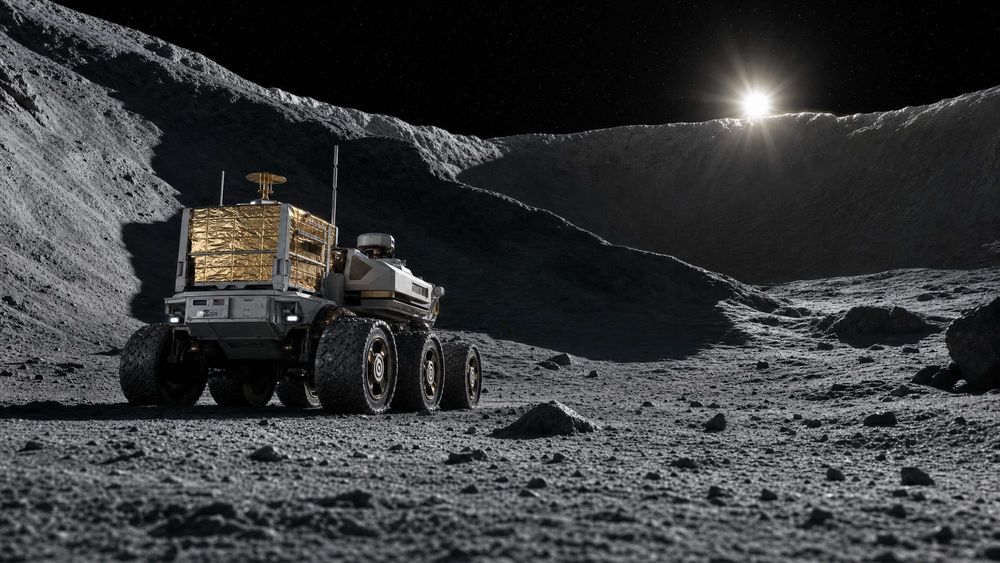
The PROMISE rover concept is where this gets wild. NASA's next-generation Mars rover uses a Multi-Mission Radioisotope Thermoelectric Generator (MMRTG) — a nuclear power source that can operate indefinitely regardless of sunlight, dust storms, or the 14-day lunar night. If NASA redirects the engineering development unit to the Moon, it would give the agency a nuclear-powered, highly autonomous rover operating in permanently shadowed regions near the lunar south pole — exactly the areas where water ice is believed to exist in commercially relevant quantities. A rover that can operate through the lunar night, in permanent shadow, and autonomously navigate terrain that would strand solar-powered vehicles, would be a game-changer for lunar resource prospecting. Administrator Isaacman reportedly said such a capability would be "awesome."
THE DOUGH
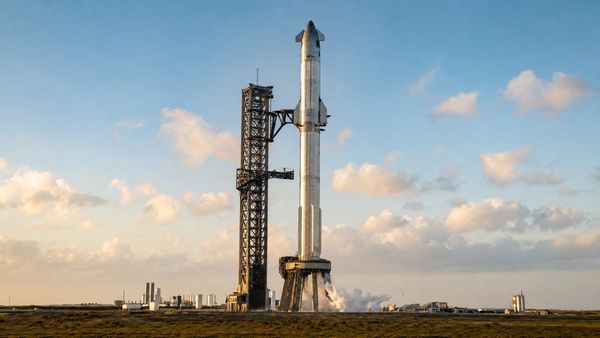
The $590 million in CLPS awards directly benefits Astrobotic, Firefly Aerospace (ticker: FLY), and Intuitive Machines (ticker: LUNR) — all of which saw their stocks move on the announcement. The broader Moon Base Program is creating sustained demand for commercial lunar services that extends well beyond these four missions. Companies in the lunar logistics chain — including SpaceX (launch), Voyager Technologies, and a growing number of payload developers — stand to benefit from the accelerating cadence. Nuclear power system providers like BWX Technologies and Teledyne could see increased demand if PROMISE goes forward.
We are not financial analysts or investment advisors. Nothing in this newsletter constitutes investment advice. All economic analysis is speculative and for informational purposes only. Do your own research.
THE POSSIBILITIES
The real significance of monthly lunar landings isn't any single payload — it's the logistics infrastructure they create. Every successful CLPS delivery proves out the commercial landing service model, drives down costs through repetition, and builds the operational experience needed for human missions. If NASA achieves even quarterly landings by 2029, it will have a lunar surface infrastructure base that makes Artemis III's crewed landing far less of a one-off stunt and far more of a sustainable program.
THE HURDLES
CLPS missions have a mixed track record. Astrobotic's Peregrine lander failed in January 2024 due to a propellant leak, and while Intuitive Machines' IM-1 successfully reached the surface, it tipped over on landing. Achieving reliable monthly landings requires dramatically improving the success rate. The PROMISE rover decision also hinges on whether diverting a Mars-bound asset to the Moon creates delays for NASA's Mars Sample Return architecture, which is already under intense budget pressure.
WHAT TO WATCH
- NASA's formal decision on whether PROMISE rover goes to the Moon — expected within months
- Firefly's and Intuitive Machines' next CLPS landing attempts and success rates
- Whether the NextSTEP-3 Appendix B solicitation for Moon Base Demonstrations attracts major new entrants
- Congressional FY2028 appropriations for Moon Base Program — funding must match ambition
- SpaceX Starship HLS progress, which underpins the entire crewed lunar architecture