THE STORY
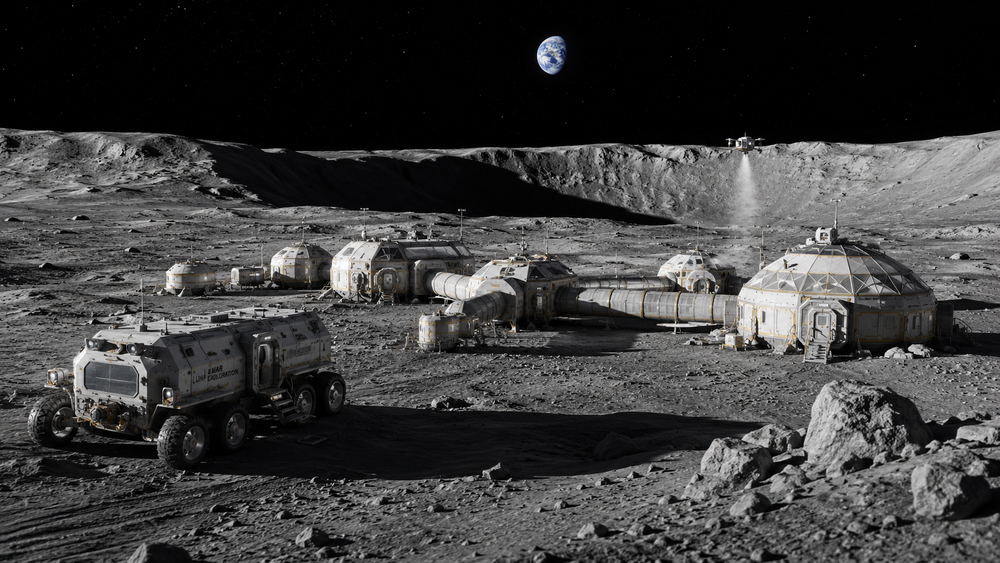
At a press conference at NASA Headquarters on May 26, Administrator Jared Isaacman outlined the agency's most concrete vision yet for a permanent human presence on the Moon, unveiling nearly $1 billion in initial contracts and describing a sprawling facility that would cover "hundreds of square miles" around the lunar South Pole. The briefing marked the formal transition of NASA's Moon Base initiative from concept to procurement, with four companies selected for the first wave of hardware development. The vision calls for near-monthly robotic landings beginning in 2027, building the infrastructure that astronauts would begin using during extended stays as early as the early 2030s.
The initial contracts include crewed Lunar Terrain Vehicles — essentially next-generation moon buggies that astronauts will drive across the regolith — and uncrewed cargo landers designed to deliver supplies, habitation modules, and equipment to the surface ahead of crewed arrivals. Perhaps the most striking element is NASA's plan to deploy scout drones that would hop across the lunar landscape to survey terrain, identify resources, and potentially mark the base's perimeter. Isaacman took care to note the agency is "very mindful of the Outer Space Treaty" regarding any perimeter concept, but the implication is clear: NASA is thinking about Moon Base not as a temporary campsite but as a defined, defended, long-duration installation with infrastructure that persists between crew rotations.
The briefing also provided the first target launch dates for the initial Moon Base missions. Three missions are expected this year alone, described as "the first of more than a dozen missions that will be announced this year." These early missions will deliver pathfinder payloads — sensors, communications relays, and site characterization instruments — to the South Pole region where water ice is believed to exist in permanently shadowed craters. The water ice is critical: it can be split into hydrogen and oxygen for rocket propellant and life support, potentially making the Moon Base self-sustaining rather than dependent on resupply from Earth. Firefly Aerospace won a $75 million subcontract from NASA's Jet Propulsion Laboratory to deliver four drones to the lunar South Pole under the MoonFall mission. The Artemis III crew — the first astronauts assigned to a lunar surface mission — will be announced on June 9, adding human faces to a program that is rapidly moving from PowerPoint to hardware.
THE DOUGH
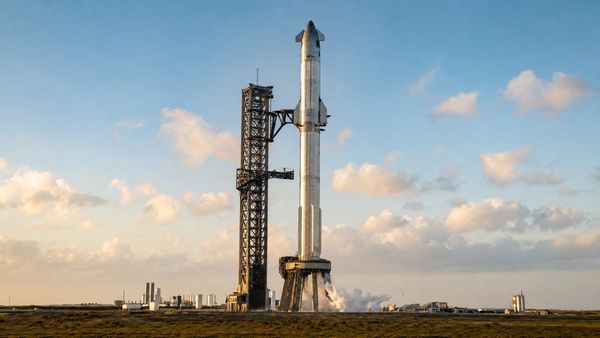
The Moon Base initiative represents a multi-decade procurement pipeline that dwarfs any single Artemis mission. Companies already positioned include Firefly Aerospace (cargo landers, drones), Intuitive Machines (lunar landers and data services), Astrobotic (now acquired by Voyager Technologies for $300 million, signaling consolidation in the lunar logistics market), and SpaceX (Starship HLS and heavy-lift transport). The crewed rover contracts alone could be worth hundreds of millions over the program's lifetime. The broader implication is a sustained demand signal for in-space logistics, surface power systems, communications relays, and resource extraction hardware — an addressable market that grows with every mission and every year astronauts spend on the surface.
We are not financial analysts or investment advisors. Nothing in this newsletter constitutes investment advice. All economic analysis is speculative and for informational purposes only. Do your own research.
THE POSSIBILITIES
The "hundreds of square miles" framing is the real signal. NASA isn't building a research station — it's staking a territorial claim. By establishing infrastructure across a wide area of the South Pole, the U.S. is effectively reserving the most scientifically and economically valuable real estate on the Moon before China's planned 2030 crewed landing. The Outer Space Treaty prohibits national sovereignty claims, but it doesn't prohibit the establishment of facilities — and whoever builds the infrastructure controls access.
THE HURDLES
The Blue Origin New Glenn explosion has thrown the Artemis lander schedule into uncertainty, since Blue Moon was designed to launch on New Glenn. SpaceX's Starship HLS variant still needs to demonstrate orbital refueling — a capability that has never been achieved. And with NASA's budget under constant political pressure, sustaining funding for a multi-decade Moon Base program through multiple administrations remains the program's existential risk.
WHAT TO WATCH
- The Artemis III crew announcement on June 9 and any updates to the mission architecture
- Which companies win the remaining Moon Base contracts NASA plans to announce this year
- The first Moon Base pathfinder mission launches and whether they meet 2026 targets
- China's response — whether Beijing accelerates its own lunar base timeline in reaction
- Congressional FY2027 appropriations for Moon Base versus competing budget priorities