
THE STORY
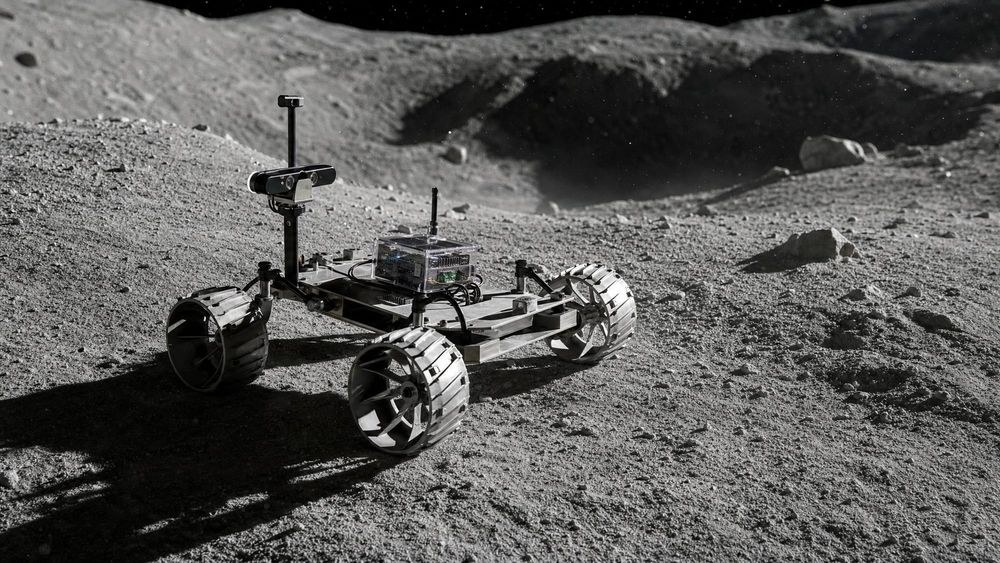
Colorado-based Lunar Outpost announced plans to fly NVIDIA Jetson-series GPU modules to the lunar surface, bringing AI compute capability to the Moon for the first time. The chips would power autonomous navigation, terrain mapping, and scientific data processing directly on lunar rovers and surface systems, rather than requiring data to be transmitted back to Earth for analysis — a process that introduces multi-second latency and consumes precious communications bandwidth.
THE DOUGH
NVIDIA's expansion into space hardware opens a new market vertical for edge AI computing beyond Earth. Lunar Outpost's position as both a rover manufacturer and an AI-compute integrator could attract defense and commercial contracts for autonomous surface operations, benefiting the company's valuation ahead of potential future funding rounds.
We are not financial analysts or investment advisors. Nothing in this newsletter constitutes investment advice. All economic analysis is speculative and for informational purposes only. Do your own research.
THE POSSIBILITIES
On-surface AI processing could enable truly autonomous lunar operations — rovers that can identify scientifically interesting rocks, navigate hazardous terrain, and make exploration decisions without waiting for instructions from Earth.
THE HURDLES
Radiation hardening consumer-grade GPU modules for the lunar environment is non-trivial. The Moon's surface receives unshielded cosmic radiation and solar particle events that can corrupt or destroy semiconductor electronics.
WHAT TO WATCH
- Radiation testing results for the NVIDIA modules in lunar-equivalent environments
- Lunar Outpost's mission timeline and launch vehicle selection
- Whether NVIDIA develops a dedicated space-rated GPU product line