THE STORY
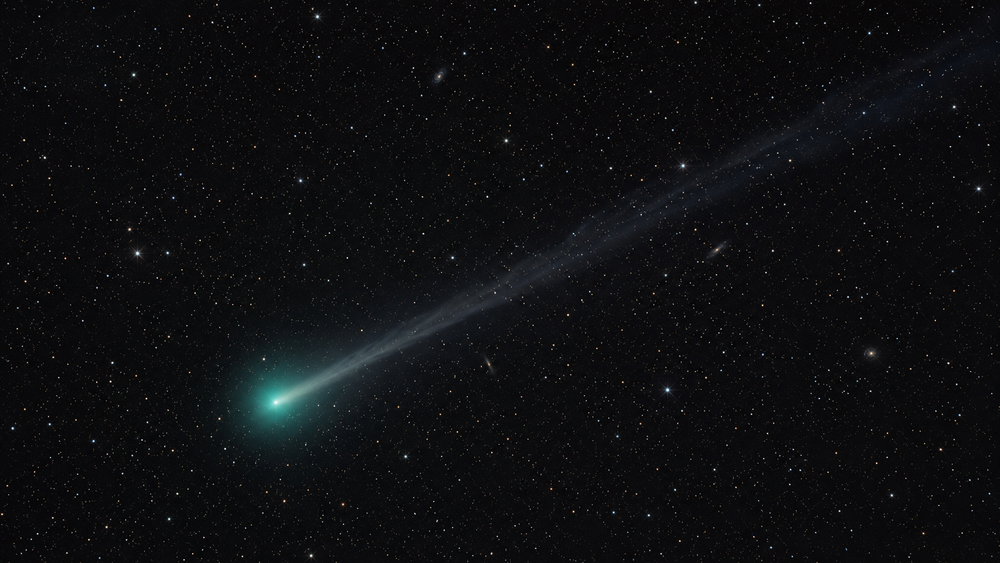
The James Webb Space Telescope observed a surprisingly large amount of methane around interstellar comet 3I/ATLAS, revealing just how chemically different this visitor from another star system is from comets born in our own solar system. Our local comets are typically dominated by water ice and carbon dioxide; 3I/ATLAS's methane-rich composition suggests it formed in a very different environment — perhaps closer to its parent star or in a protoplanetary disk with a fundamentally different chemistry than the one that birthed our Sun's planets.
THE DOUGH
JWST's ability to characterize interstellar objects strengthens the scientific case for extending the telescope's mission and funding follow-on observatories — every unique discovery reinforces the return on investment of flagship space telescopes.
We are not financial analysts or investment advisors. Nothing in this newsletter constitutes investment advice. All economic analysis is speculative and for informational purposes only. Do your own research.
THE POSSIBILITIES
Each interstellar object that passes through our solar system is a free sample from another stellar neighborhood. If future missions can intercept one — a concept NASA and ESA have studied — the chemical analysis could reveal whether the building blocks of life are universal or unique to our corner of the galaxy.
THE HURDLES
Interstellar objects are detected with very little lead time, move at extreme velocities, and are typically small and faint. No existing or planned spacecraft is designed to intercept one.
WHAT TO WATCH
- Additional JWST observations of 3I/ATLAS as it approaches perihelion
- ESA's Comet Interceptor mission, which is designed to encounter a long-period or interstellar comet
- Whether the methane detection prompts new models of extrasolar planetary formation