
THE STORY
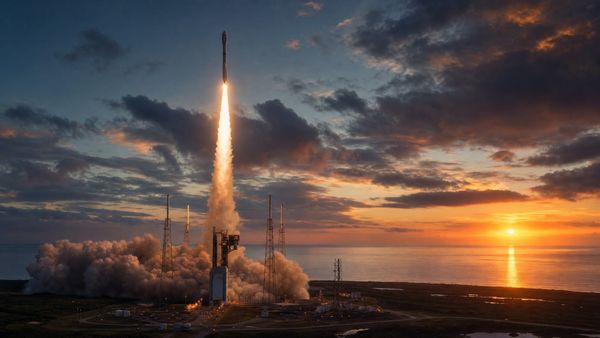
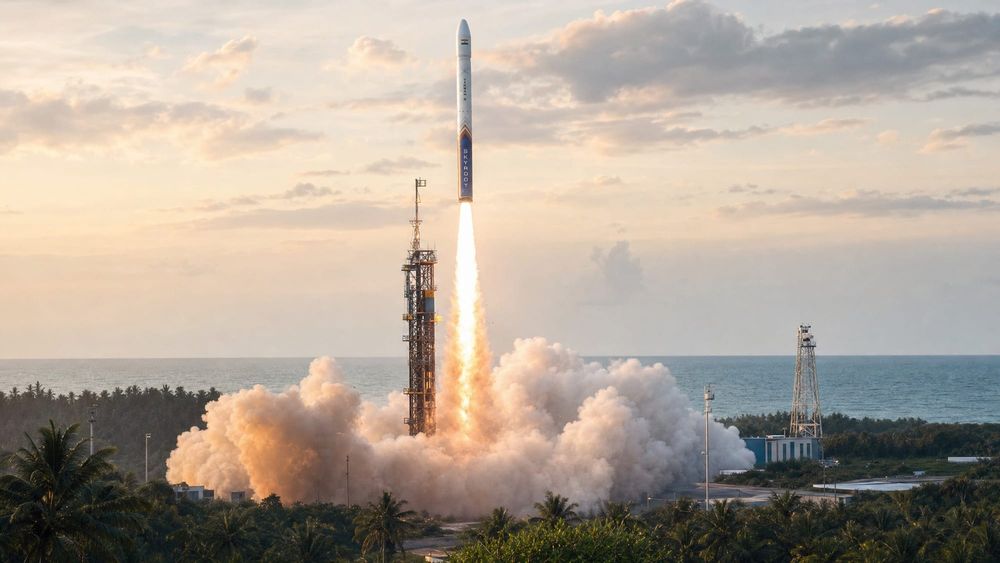
Skyroot Aerospace became the first private Indian company to reach orbit on July 19, when its Vikram-1 rocket lifted off from the Satish Dhawan Space Centre on India's southeastern coast and successfully delivered its payload to space. The achievement is historic not just for Skyroot but for an entire nation's commercial space ambitions — India has long been a spacefaring power through its government agency ISRO, but the country's private launch sector has been constrained by regulation, funding limitations, and the sheer difficulty of orbital rocketry. Skyroot just blew through all of those barriers on its first attempt.
The Vikram-1 is a solid-fueled, four-stage launch vehicle designed to place small satellites into low Earth orbit. Named after Vikram Sarabhai, the father of India's space program, the rocket represents years of development by a company founded in 2018 by two former ISRO engineers, Pawan Kumar Chandana and Naga Bharath Daka. Skyroot previously flew a suborbital sounding rocket in 2022 — India's first private space launch of any kind — but the leap from suborbital to orbital is enormous. Reaching orbit requires roughly 25 times more energy than a suborbital hop, and the failure rate for debut orbital launches across the industry historically hovers around 50%. Skyroot beat those odds decisively.
The timing couldn't be more significant. India reformed its space policy in 2020 to allow private companies to build and launch rockets, creating the Indian National Space Promotion and Authorization Centre (IN-SPACe) to license commercial activities. The country's space economy is projected to reach $44 billion by 2033, and Skyroot is now positioned as a credible launch provider in the global small-satellite market — a segment where demand is surging but dedicated launch capacity remains scarce. Competitors like Agnikul Cosmos, which is developing a 3D-printed semi-cryogenic engine, are close behind. India's private space race is now genuinely underway, and Skyroot just fired the starting gun.
THE DOUGH
Skyroot has raised over $100 million in venture funding to date, and a successful orbital debut dramatically de-risks future rounds. The company enters a global small-launch market where Rocket Lab remains the dominant commercial player but where demand consistently outstrips supply. India's cost advantages in manufacturing and engineering talent could make Skyroot's launch pricing highly competitive. For investors watching emerging space markets, India's private launch sector — backed by favorable government policy and a deep talent pool — represents one of the most compelling growth stories outside the U.S. The broader Indian space ecosystem, including satellite builders like Pixxel and Dhruva Space, benefits from having a domestic private launch provider.
We are not financial analysts or investment advisors. Nothing in this newsletter constitutes investment advice. All economic analysis is speculative and for informational purposes only. Do your own research.
THE POSSIBILITIES
India could become the third major hub for private orbital launch after the U.S. and China, leveraging its cost structure to undercut Western providers on price while its equatorial-adjacent geography offers efficient access to low-inclination orbits. If Skyroot and Agnikul both achieve operational cadence, India's private sector could capture a meaningful share of the global small-sat launch market within five years.
THE HURDLES
One successful launch does not make a launch company. Skyroot must now demonstrate reliability across multiple flights, build manufacturing capacity, and compete against Rocket Lab's Electron (which has over 50 flights of heritage) and a growing roster of Chinese small-launch vehicles. Scaling production of solid rocket motors and establishing a sustainable launch cadence from Indian spaceports will test the company's operational maturity.
WHAT TO WATCH
- Skyroot's next Vikram-1 launch and whether it can establish a regular cadence
- Agnikul Cosmos's progress toward its own orbital attempt with a 3D-printed engine
- IN-SPACe licensing activity and whether India streamlines approvals for commercial launches
- International customers booking Vikram-1 launches — a key validation of commercial viability
- Indian government defense and intelligence satellite demand funneled to private providers