
THE STORY
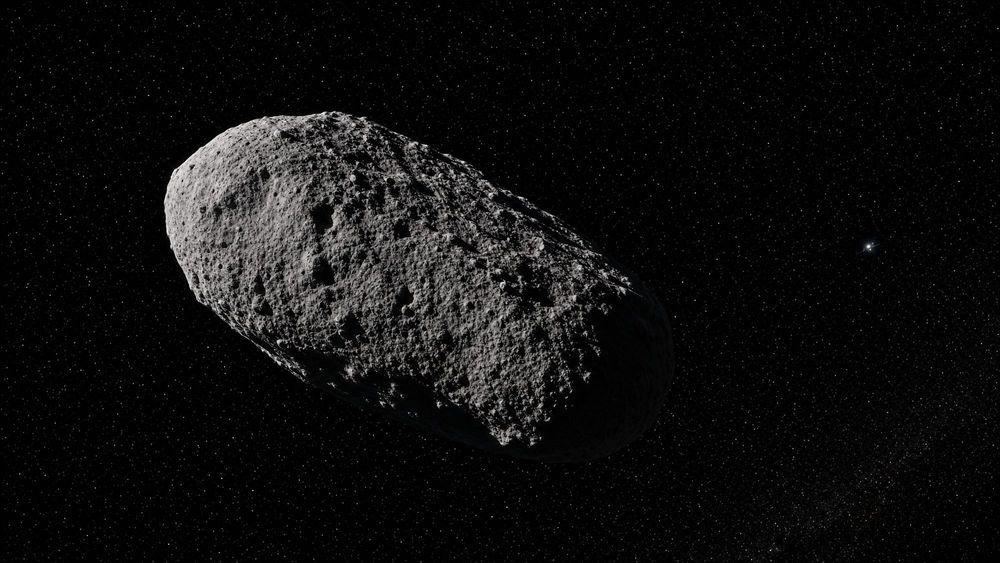
China's Tianwen-2 spacecraft has successfully rendezvoused with asteroid Kamo'oalewa (also designated 2016 HO3), Earth's so-called "quasi-moon," and sent back the first-ever close-up images of this tiny, enigmatic space rock. Kamo'oalewa is not a true moon — it orbits the Sun, not Earth — but its orbit is so closely synchronized with our planet's that it appears to dance around Earth in a stable co-orbital pattern, making it one of the most accessible deep-space targets for sample return. The images reveal an elongated, rocky body, confirming theoretical predictions about its shape and surface characteristics. Tianwen-2's next objective is landing on the surface and collecting samples to return to Earth.
THE DOUGH
A successful Kamo'oalewa sample return would cement China's position as a leading planetary science power, following its Chang'e-5 lunar sample return. Companies developing asteroid mining technologies and in-space resource utilization would gain valuable data on near-Earth asteroid composition. The mission also validates China's deep-space navigation and rendezvous capabilities, with implications for future commercial asteroid missions.
We are not financial analysts or investment advisors. Nothing in this newsletter constitutes investment advice. All economic analysis is speculative and for informational purposes only. Do your own research.
THE POSSIBILITIES
Some scientists have hypothesized that Kamo'oalewa might be a fragment of the Moon, blasted free by an ancient impact. If the returned samples confirm a lunar origin, it would rewrite our understanding of the Earth-Moon system's impact history — and demonstrate that Earth's gravitational neighborhood contains accessible fragments of our own Moon waiting to be studied.
THE HURDLES
Landing on and sampling a small, irregularly shaped asteroid in a quasi-satellite orbit is extraordinarily difficult — the low gravity, unknown surface strength, and precise navigation requirements make this among the hardest robotic missions ever attempted. Sample return adds years and additional risk to the mission timeline.
WHAT TO WATCH
- Tianwen-2 orbit insertion and proximity operations around Kamo'oalewa
- Landing attempt timeline and surface sampling approach
- Scientific analysis of surface composition from remote sensing data
- Sample return capsule reentry date and recovery