
THE STORY
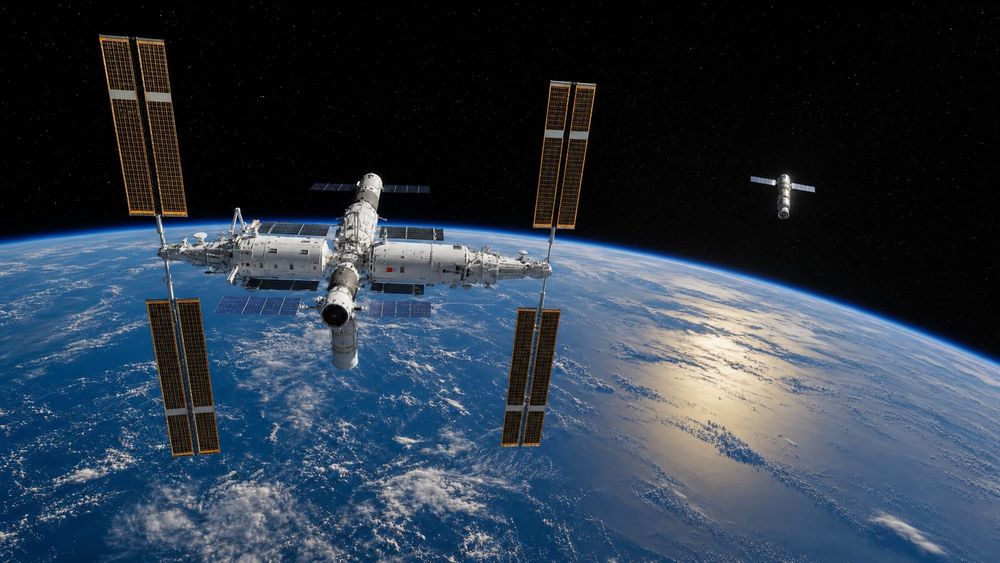
China announced plans to add three new modules to its Tiangong space station along with a co-orbiting space telescope, effectively doubling the station's size, just as the International Space Station inches toward its planned Pacific Ocean splashdown. The expansion will give China the only fully operational orbital laboratory in the coming years — a geopolitical and scientific position no single nation has held since the early ISS era. The new modules will expand Tiangong's research capacity, crew accommodation, and docking ports, while the co-orbiting telescope will conduct deep-sky surveys and can dock with the station for servicing and upgrades. The contrast with the ISS situation is stark: NASA's inspector general has flagged growing concerns about the aging station's health, and a recent spacewalk to repair the Canadarm2 robotic arm underscored how much maintenance the 25-year-old facility now requires.
For the global scientific community, the implications are significant. As ISS deorbits, researchers who depend on microgravity access will either need berths on Tiangong — which requires cooperation with Beijing — or must wait for commercial stations from Vast, Axiom, or Blue Origin that remain years from operational status. China's expansion creates leverage and opportunity in equal measure.
THE DOUGH
The Tiangong expansion creates demand for international partnerships and commercial payloads. Companies developing microgravity research hardware and in-space manufacturing experiments may find Tiangong their only near-term option once ISS is gone. The co-orbiting telescope also creates a market for servicing missions — a capability Chinese and international companies could compete to provide.
We are not financial analysts or investment advisors. Nothing in this newsletter constitutes investment advice. All economic analysis is speculative and for informational purposes only. Do your own research.
THE POSSIBILITIES
China's expanded Tiangong could become the default destination for non-aligned nations seeking space station access, giving Beijing enormous soft-power leverage at exactly the moment the U.S. is trying to build international coalitions around Artemis and the lunar economy.
THE HURDLES
The timeline for the expansion hasn't been specified, and China's space station program has faced its own delays. The co-orbiting telescope — Xuntian — has been pushed back multiple times already. Meanwhile, commercial U.S. stations could arrive faster than expected if NASA accelerates funding.
WHAT TO WATCH
- Detailed timeline for the three new Tiangong modules
- Xuntian space telescope launch date and science capabilities
- International agreements for research access to the expanded station
- Progress on commercial U.S. stations from Vast, Axiom, and Blue Origin