
THE STORY
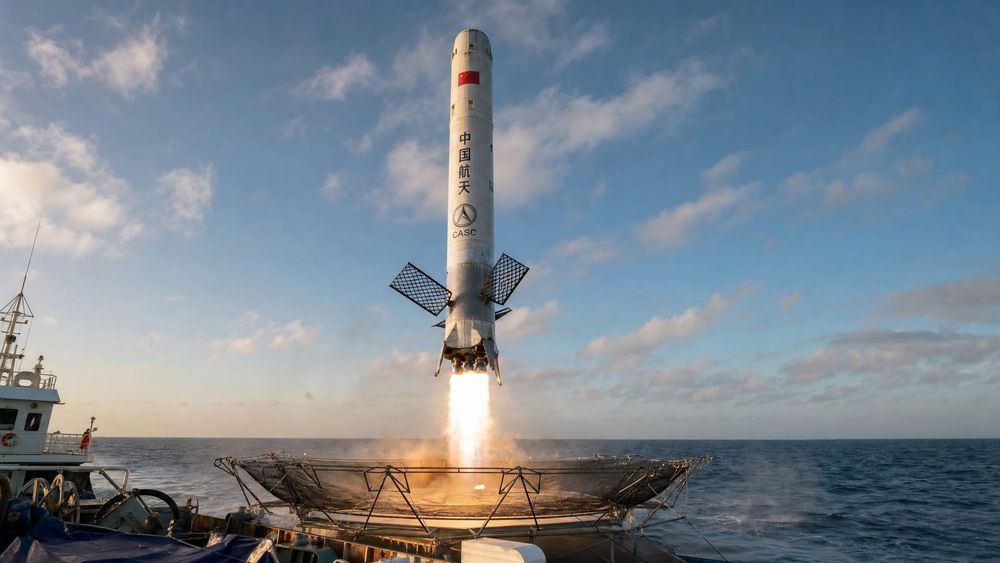
On Friday, July 10, 2026, China's state-owned China Aerospace Science and Technology Corporation (CASC) launched the maiden flight of its Long March 10B rocket and successfully recovered the first-stage booster at sea — making China only the second nation in history to recover an orbital-class booster after launch. The recovery method was distinctly Chinese: instead of a propulsive landing on a drone ship or a mid-air helicopter catch, CASC guided the booster onto a net system aboard a ship in the ocean. The Long March 10B lifted a satellite to orbit from a coastal launch site while the first stage, after separating and reentering the atmosphere, executed a controlled descent onto the net platform at sea. CASC confirmed the booster was structurally intact after recovery.
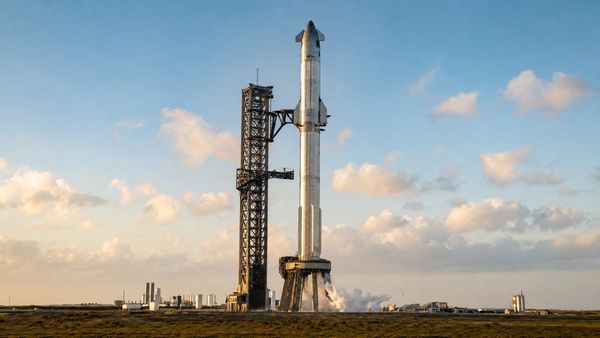
The technical achievement is significant on multiple levels. SpaceX pioneered orbital booster recovery with Falcon 9's propulsive drone-ship landings in 2016 and later developed the "chopstick" catch mechanism for Super Heavy boosters. China's net-catch approach is an entirely different engineering philosophy — one that potentially simplifies the booster's landing systems by removing the need for precision hover and fine-thrust control during the final seconds, trading that for a robust deceleration-and-capture system on the ship side. The decision to debut this on the Long March 10B's first flight — meaning CASC attempted recovery on the vehicle's maiden launch — signals extraordinary confidence in the guidance, navigation, and aerodynamic control systems built into the booster. For comparison, SpaceX flew Falcon 9 multiple times before attempting its first recovery.
The Long March 10B is part of China's broader push to develop a reusable launch architecture that can serve both its growing commercial satellite market and its ambitious crewed spaceflight goals. CASC has previously tested vertical-landing prototypes with suborbital hop tests, but the net-catch system represents a parallel development path — one that may be better suited to China's naval infrastructure and maritime recovery capabilities. The achievement arrives as China's commercial space sector is consolidating under a state-backed consortium whose membership was revealed this same week, offering a rare look at which companies Beijing considers established players. China now has a viable path to dramatically lower its launch costs, which could accelerate deployment of its own broadband mega-constellations and deep-space exploration programs. The message to the global launch industry is unmistakable: the reusability revolution is no longer a one-country monopoly.
THE DOUGH
China's entry into orbital reusability directly threatens the cost advantage that has underpinned SpaceX's dominance of the global commercial launch market. If CASC can demonstrate rapid reuse, Chinese launch prices — already competitive on expendable vehicles — could undercut Western providers further, pressuring Arianespace, Rocket Lab, and others to accelerate their own reusability timelines. Defense and intelligence agencies in the U.S. and Europe may increase funding for domestic launch alternatives to reduce dependence on any single provider. Companies supplying components for reusable launch systems — from grid fins to landing legs to thermal protection — could see expanded demand as more nations pursue the technology.
We are not financial analysts or investment advisors. Nothing in this newsletter constitutes investment advice. All economic analysis is speculative and for informational purposes only. Do your own research.
THE POSSIBILITIES
The net-catch approach could prove more scalable than propulsive landing for certain vehicle classes — particularly smaller boosters where the mass penalty of landing legs and fuel reserves is proportionally higher. If the system works reliably, it could become the preferred recovery method for China's rapidly growing private launch companies, creating an entire parallel ecosystem of reusable rockets that operates under completely different engineering assumptions than Western designs.
THE HURDLES
One successful recovery does not make a reusable rocket program. CASC must demonstrate that the recovered booster can be refurbished and reflown quickly and cheaply — the economics of reuse only work if turnaround times and refurbishment costs are low. Sea-state limitations could also constrain how often the net system can operate, and scaling the approach to larger, heavier boosters remains unproven.
WHAT TO WATCH
- Whether CASC attempts to refly the recovered Long March 10B booster — and how quickly
- China's commercial launch companies (Landspace, iSpace, Galactic Energy) adopting net-catch or alternative recovery methods
- Impact on pricing for non-Chinese commercial launch providers
- CASC timeline for applying reusability to the crewed Long March 10 variant
- U.S. and European policy responses to a second reusable launch competitor