THE STORY
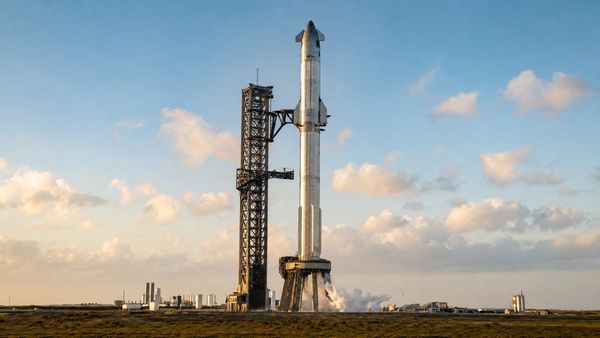
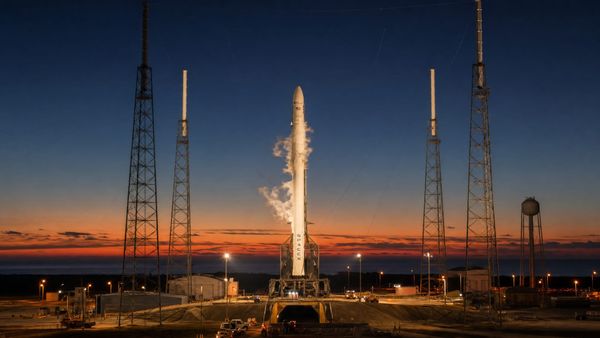
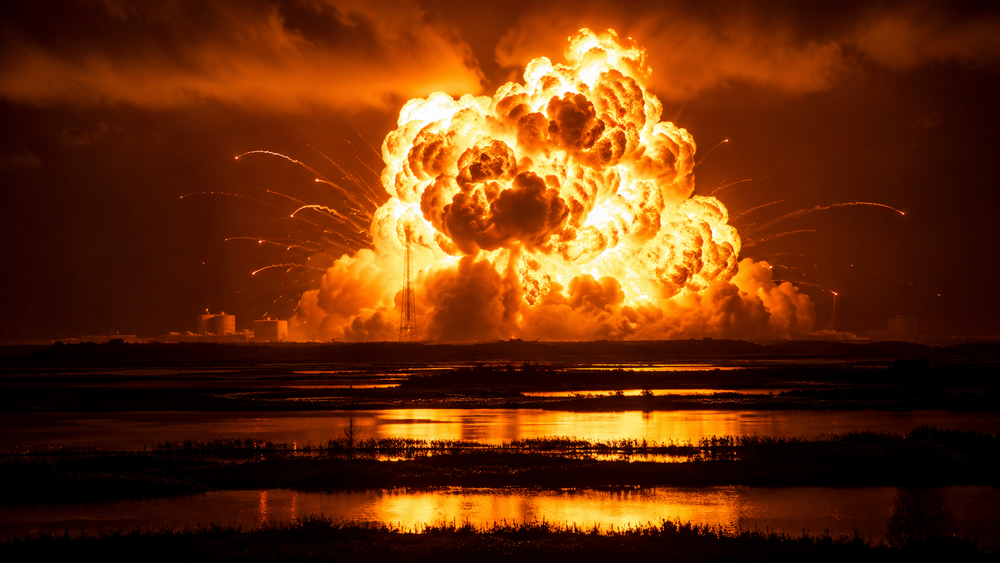
Blue Origin's New Glenn heavy-lift rocket detonated during a routine static fire test at Launch Complex 36 at Cape Canaveral Space Force Station on the evening of May 28, producing a fireball so enormous it was visible from hundreds of miles away and captured in satellite imagery from orbit. The explosion destroyed the rocket, obliterated the launch pad's main infrastructure, and sent debris so far that the Space Force warned beachgoers about wreckage potentially washing ashore. Blast overpressure shattered windows at a hangar roughly a mile from the pad. Jeff Bezos described it as "a very rough day" while noting it was "too early to know the root cause."
CEO Dave Limp struck a defiant tone, posting that the company's propellant farm — including liquid oxygen, liquid hydrogen, and LNG tanks — survived in good shape, and that the main support gantry, while damaged, can be repaired in place rather than rebuilt from scratch. Blue Origin has committed to flying New Glenn again before the end of 2026, a timeline that SpaceX veterans interviewed by Ars Technica called extremely aggressive given the scope of pad damage. For context, SpaceX's own Amos-6 pad explosion in 2016 took about 14 months to rebuild from less severe damage, and SpaceX had the advantage of a second operational pad at the time.
The reverberations extend far beyond Blue Origin. Amazon's Leo broadband constellation, which had booked New Glenn for its largest satellite deployment batches, faces delays that compound an already tight FCC deadline — the agency just granted Amazon a waiver to deploy 50% of its constellation by end of July, with conditions on spectrum priority. AST SpaceMobile, which depends on New Glenn for its direct-to-smartphone satellites, now expects its initial commercial service to slip three to six months into the first half of 2027. Most critically for space enthusiasts, Blue Origin's Blue Moon lander — one of two vehicles selected for NASA's Artemis lunar surface missions — was being designed to launch on New Glenn. NASA Administrator Jared Isaacman has already urged Blue Origin to identify an alternative launcher to meet Artemis mission deadlines, effectively acknowledging that New Glenn's return-to-flight schedule is too uncertain to bet the Moon program on. Hours before the explosion, the Space Force had awarded Blue Origin a national security launch task order, underscoring the irony of timing. The incident has single-handedly extended SpaceX's monopoly on heavy-lift commercial launch for at least another year, concentrating even more of the West's space access in a single company at a moment when the industry desperately needs redundancy.
THE DOUGH
Blue Origin is privately held, so the direct financial impact is opaque, but the explosion's ripple effects are publicly visible. AST SpaceMobile (ASTS) shares tumbled immediately. SpaceX, preparing for a $75 billion IPO at a $1.77 trillion valuation, sees its competitive moat widen further — every customer that can't fly on New Glenn becomes a potential SpaceX booking. Rocket Lab (RKLB), which has been surging on its own military contracts, benefits as the only other credible U.S. commercial launch alternative for certain payloads. Amazon's Leo constellation timeline pressure could shift satellite manufacturing orders and launch bookings across the industry. Insurance markets for launch vehicles will almost certainly reprice risk.
We are not financial analysts or investment advisors. Nothing in this newsletter constitutes investment advice. All economic analysis is speculative and for informational purposes only. Do your own research.
THE POSSIBILITIES
The explosion may inadvertently accelerate the case for launch site redundancy as a national security imperative. If the U.S. military and intelligence community conclude that depending on a single heavy-lift provider is an unacceptable strategic risk, it could unlock new government funding for alternative launch vehicles — potentially benefiting Rocket Lab's Neutron program, ULA's Vulcan, or even newer entrants.
THE HURDLES
Blue Origin has never successfully recovered from a failure of this magnitude, and its track record of meeting ambitious timelines is poor — New Glenn's development stretched years beyond original projections. The root cause investigation could reveal systemic design issues that push the return-to-flight well beyond the end-of-2026 target, cascading delays across every customer manifest.
WHAT TO WATCH
- Root cause determination and whether it points to a systemic engine or stage design flaw versus a one-off testing anomaly
- Amazon's contingency launch plans for its Leo constellation — will more payloads shift to Atlas V, Ariane 6, or Falcon 9?
- NASA's formal decision on an alternative launcher for the Blue Moon lander
- Blue Origin's pad reconstruction timeline and whether insurance covers the full scope of damage
- Whether AST SpaceMobile secures alternative launch capacity to protect its commercial service timeline