
THE STORY
Blue Origin, Jeff Bezos's aerospace company, has initiated its first-ever external funding round, seeking to raise up to $10 billion at a pre-money valuation of approximately $130 billion. The round is reportedly being led by Coatue Asset Management, with Bezos himself participating alongside other institutional investors. For a company that has operated for over two decades on Bezos's personal checkbook — he has injected an estimated $13 billion or more of his own fortune — the decision to accept outside capital represents a fundamental strategic pivot. Blue Origin is no longer a billionaire's hobby project; it is signaling its intent to compete at the scale that the modern space economy demands.
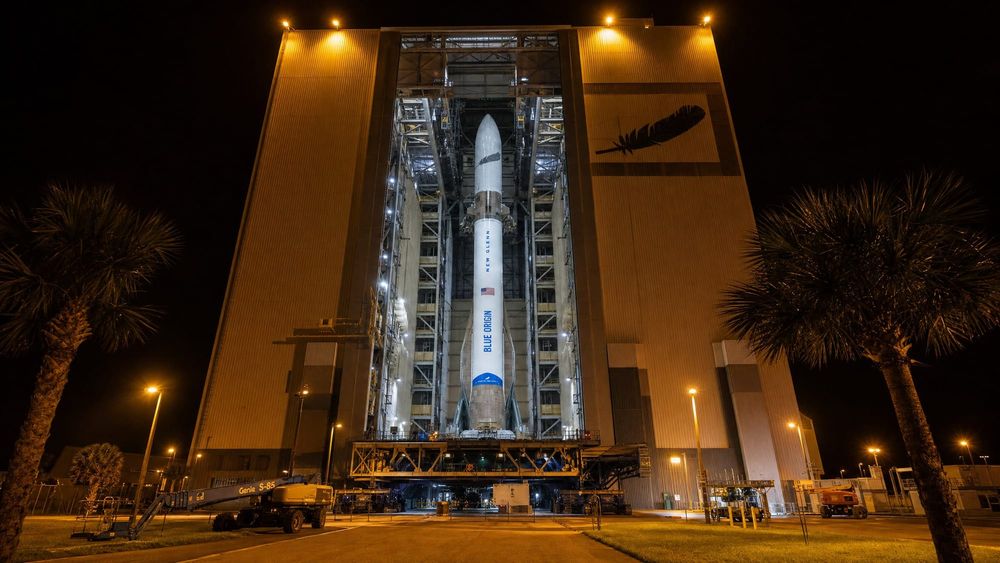
The timing is deliberate. Blue Origin is simultaneously recovering from the catastrophic explosion of a New Glenn rocket on its launch pad at Cape Canaveral in late May 2026, which severely damaged Launch Complex 36 and destroyed the vehicle. Despite that setback, the company confirmed at the Spacetide space commerce conference that it has seven Blue Moon lunar lander vehicles in various stages of production for NASA's Artemis program, and engineering work on the landers continues uninterrupted. The $10 billion raise would fund Blue Origin's ambitions across multiple business lines: New Glenn launch services (once pad reconstruction is complete), the Blue Moon lunar lander program, the company's nascent satellite constellation plans, and its New Shepard suborbital tourism business. At a $130 billion valuation, Blue Origin would be valued at roughly one-fifteenth of SpaceX's nearly $2 trillion market cap — a gap that reflects both SpaceX's operational lead and Blue Origin's unrealized potential.
The move also sets up a fascinating competitive dynamic. SpaceX went public in June 2026 and now trades openly; Blue Origin is raising private capital at a valuation that would make it one of the most valuable private companies in the world. If Blue Origin follows SpaceX to public markets within the next few years, it would give investors a second pure-play orbital launch and space infrastructure company to choose from — something the market currently lacks. For the broader space industry, Blue Origin's ability to attract $10 billion in outside capital validates the thesis that space infrastructure is a fundable, investable asset class at scale, not just a SpaceX-specific phenomenon.
THE DOUGH
The $130 billion valuation gives investors a benchmark for Blue Origin's business lines: New Glenn launch services, Blue Moon lunar landers, a planned satellite constellation, and Blue Ring in-space transport. At that valuation, Blue Origin is priced at more than twice Rocket Lab's market capitalization, despite having far fewer operational launches. The raise signals growing institutional appetite for space infrastructure as an asset class. Companies in Blue Origin's supply chain, including BE-4 engine component suppliers and launch pad construction firms, benefit from the increased capital commitment. A potential future IPO would create a second publicly traded large-scale launch provider.
We are not financial analysts or investment advisors. Nothing in this newsletter constitutes investment advice. All economic analysis is speculative and for informational purposes only. Do your own research.
THE POSSIBILITIES
The most consequential aspect of this raise may be what it means for Blue Origin's culture. Bezos-funded companies operate differently from investor-funded ones — there's less urgency, more tolerance for long development timelines, and fewer external accountability mechanisms. Outside investors will demand milestones, timelines, and returns. That pressure could be exactly what Blue Origin needs to close the execution gap with SpaceX.
THE HURDLES
Blue Origin must rebuild Launch Complex 36 after the New Glenn explosion, a process that could take many months and delay the company's first orbital commercial launch even further. The company has never successfully reached orbit, and its operational track record consists primarily of suborbital New Shepard flights. Justifying a $130 billion valuation without orbital revenue requires investors to price in years of future execution on programs that are behind schedule.
WHAT TO WATCH
- Launch Complex 36 reconstruction timeline and New Glenn return-to-flight date
- Blue Moon lunar lander testing milestones and Artemis V mission readiness
- Details on Blue Origin's satellite constellation plans and target market
- Whether additional investors join the round and at what terms
- Any signals toward an eventual Blue Origin IPO