
THE STORY
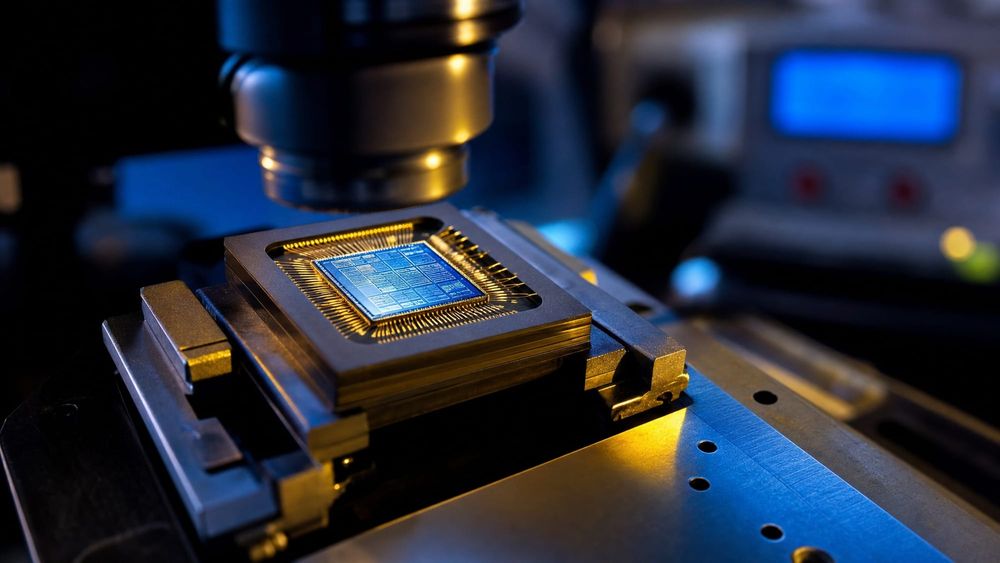
BAE Systems and GlobalFoundries have announced the successful testing milestone of the Endura System-on-Chip space processor — a radiation-hardened computing platform built on a domestic trusted microelectronics supply chain that could dramatically increase the processing power available to satellites operating in the harshest radiation environments. The Endura chip represents a generational leap over the radiation-hardened processors currently flying on most military and science satellites, which are often based on computing architectures that are a decade or more behind commercial state-of-the-art. In the increasingly contested space environment, the ability to process data onboard — rather than downlinking everything to the ground — is becoming a critical tactical advantage. Satellites equipped with more powerful processors can run AI inference models, autonomously detect and track targets, make real-time decisions about sensor tasking, and compress vast amounts of imagery data before transmitting it through limited-bandwidth links.
The domestic supply chain aspect is strategically significant. Endura is manufactured using GlobalFoundries' U.S.-based fabrication facilities, ensuring that the most sensitive national security space systems are not dependent on foreign semiconductor fabs. This aligns with broader Pentagon efforts to reduce reliance on overseas chip production for defense-critical applications.
THE DOUGH
Endura positions BAE Systems to capture a growing share of the space processor market as the Pentagon shifts toward proliferated constellations requiring hundreds of satellites with onboard AI. GlobalFoundries benefits from a high-value defense contract that validates its trusted foundry capabilities. The processor could also find applications in commercial Earth observation satellites, where onboard processing reduces downlink costs and increases data timeliness.
We are not financial analysts or investment advisors. Nothing in this newsletter constitutes investment advice. All economic analysis is speculative and for informational purposes only. Do your own research.
THE POSSIBILITIES
If Endura delivers the processing power BAE claims, it could enable true autonomous operations for military satellites — spacecraft that don't need ground commands to make tactical decisions. That capability transforms space from a sensor layer into an action layer.
THE HURDLES
Radiation-hardened processors always lag commercial chips in raw performance, and the gap may widen as commercial AI accelerators advance. Flight qualification and production ramp timelines could also delay Endura's availability for near-term constellation programs that are already in procurement.
WHAT TO WATCH
- Endura flight qualification timeline and first satellite integration
- Adoption by Space Development Agency proliferated constellation programs
- Competing rad-hard processor announcements from Microchip, Cobham, or others