

THE STORY
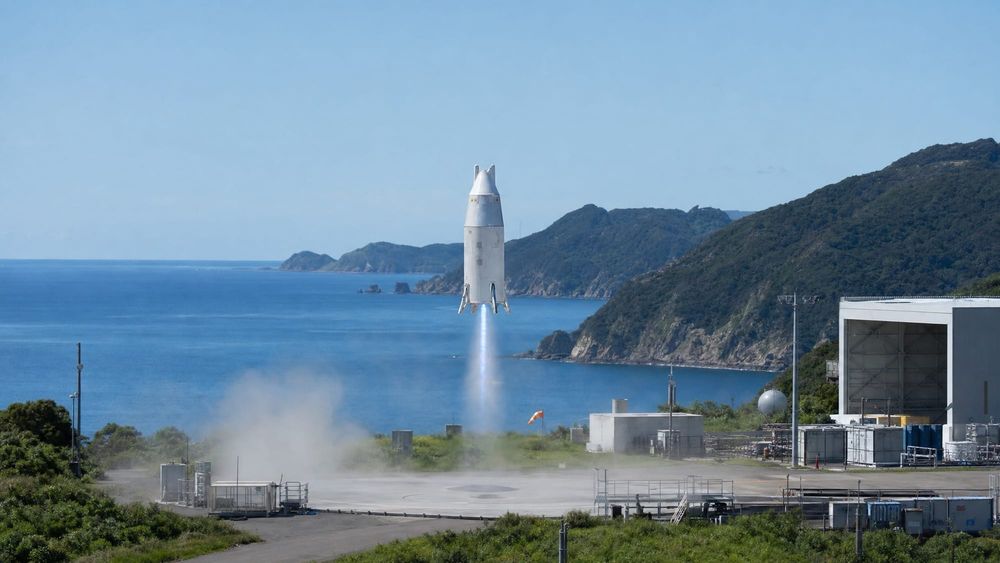
Japan has succeeded in the first-ever flight test of its RV-X experimental reusable rocket prototype, marking the country's entry into the global race to develop vertically landing launch vehicles. The test, conducted by JAXA, demonstrated controlled vertical ascent, hover, and powered descent landing — capabilities essential for any future reusable orbital launch system. While the hop was suborbital and the vehicle is subscale, the successful demonstration validates the guidance, navigation, and control algorithms that Japan will need for a full-scale reusable launcher.
Japan's broader launch ambitions have been hampered by struggles with both current and new vehicles. The H3 rocket experienced a high-profile failure on its debut in 2023 and has only recently achieved reliable flight status, while the country's small-satellite launcher Epsilon S suffered a test failure in 2023 as well. The RV-X success provides a bright spot and signals that JAXA is serious about competing in a launch market increasingly defined by reusability. The Japanese government has stated its intent to sharply increase national launch activity, and the RV-X program feeds directly into conceptual studies for a future reusable first stage that could dramatically lower Japan's cost to orbit.
The test comes as China has also accelerated its reusable rocket development, with the Long March 10C's first successful booster recovery making headlines the same week. The global roster of entities pursuing powered vertical landing now includes SpaceX (operational), Blue Origin (operational on New Shepard), Rocket Lab (developing for Neutron), China's CASC and commercial firms (first recovery achieved), and now Japan. For the broader space economy, each new entrant pursuing reusability is a bet that SpaceX's cost-per-kilogram economics will become the industry baseline rather than the exception.
THE DOUGH
Japan's aerospace industrial base — Mitsubishi Heavy Industries, IHI Corporation, and Kawasaki Heavy Industries — stands to benefit from government investment in reusable launch technology. Jensen Huang's recent Japan visit, which produced deals across the country's tech ecosystem, included partnerships with Japanese robotics firms on NVIDIA's physical AI platforms, suggesting growing U.S.-Japan technology integration that could extend to launch services. Japan's position as a launch provider for allied nations' satellites — particularly in the Indo-Pacific — gives it strategic value that supports sustained government funding.
We are not financial analysts or investment advisors. Nothing in this newsletter constitutes investment advice. All economic analysis is speculative and for informational purposes only. Do your own research.
THE POSSIBILITIES
Japan's real advantage isn't technology — it's geography. A reliable reusable launcher operating from Tanegashima or Uchinoura would serve the booming Indo-Pacific satellite market without requiring customers to route through U.S. export controls or Chinese political entanglements.
THE HURDLES
Subscale hop tests are a long way from operational reusable vehicles. SpaceX spent over a decade iterating from Grasshopper hops to routine Falcon 9 landings. Japan's comparatively modest space budget and slower development cadence make a similar timeline unlikely without significant budget increases or international partnerships.
WHAT TO WATCH
- JAXA's timeline for scaling RV-X technology into a full-size reusable stage
- H3 rocket launch cadence and reliability record through 2027
- Japanese government space budget trajectory under the new KASA strategy
- China's Long March 10C commercial launch cadence following first booster recovery


