
THE STORY
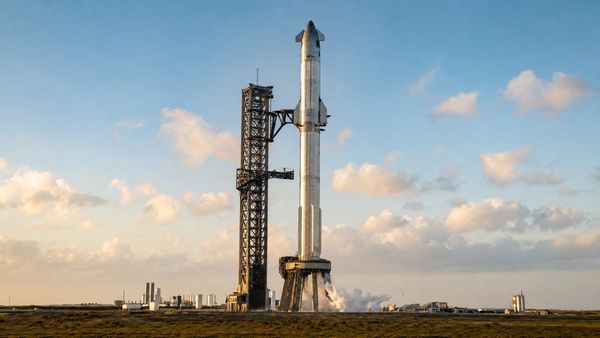
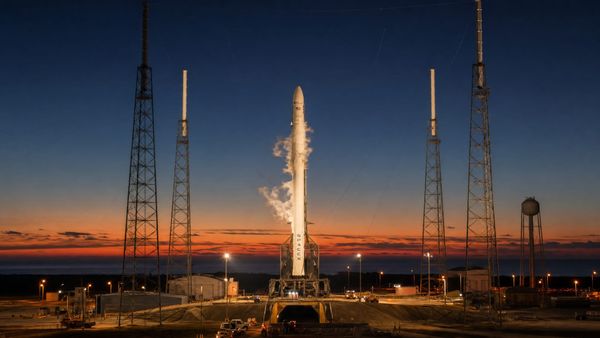
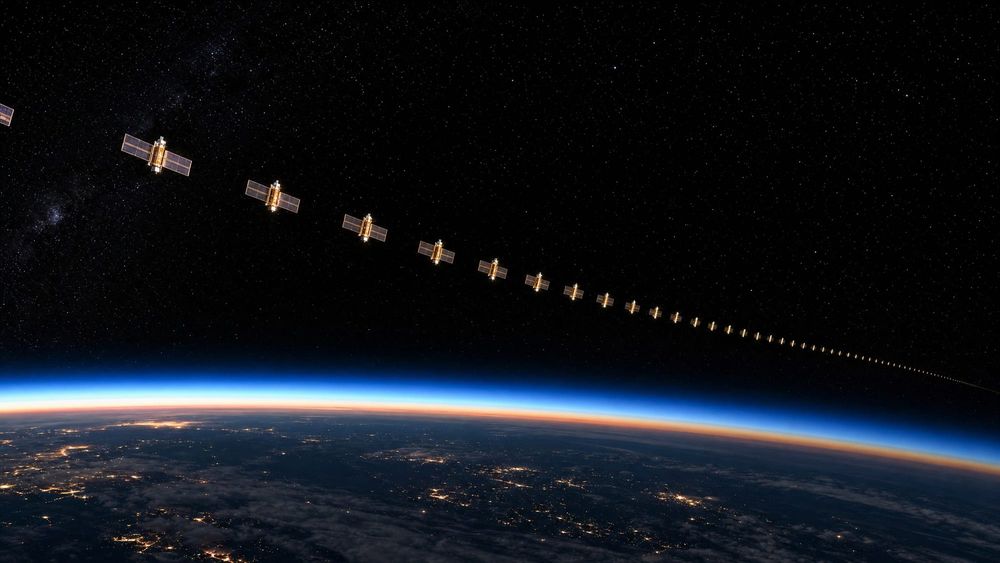
With the successful launch of its Leo Atlas 8 mission on July 2, 2026 — the final Atlas V rocket to carry a satellite payload — Amazon's Project Kuiper, now rebranded as Amazon Leo, has reached 396 satellites in low Earth orbit. Chris Weber, VP of business and product for Amazon Leo, confirmed the constellation has hit a critical milestone: enough satellites deployed to "support continuous service across initial latitudes." The company previously confirmed plans to begin commercial service in mid-2026, and with this deployment threshold crossed, the countdown to Amazon's entry into the satellite broadband market is effectively on.
The Atlas 8 mission was historically significant for another reason: it was the last Atlas V to fly a satellite payload, ending a two-decade era for United Launch Alliance's workhorse rocket. ULA has been Amazon Leo's primary launch provider during the constellation's build-out phase, with each Atlas V 551 configuration delivering a batch of satellites to orbit. Going forward, Amazon is expected to shift remaining launches to its diversified launch manifest, which includes agreements with Blue Origin's New Glenn (once it returns to flight), Arianespace's Ariane 6, and potentially SpaceX's Falcon 9 — though the competitive dynamics between Amazon and SpaceX make that last option complicated at best.
Amazon has invested well over $10 billion in Leo, making it one of the most expensive commercial space ventures ever undertaken. The constellation is designed to provide broadband internet service using a constellation of 3,236 satellites in orbital shells between 590 and 630 kilometers altitude. Unlike SpaceX's Starlink, which has grown organically over years of iterative launches, Amazon is attempting to build out rapidly against an FCC deployment deadline that requires half its constellation operational by mid-2026. Reaching continuous coverage at initial latitudes — likely covering populated mid-latitude regions — means Amazon can begin onboarding customers and generating revenue, turning a massive capital expenditure into a potentially massive revenue stream. Amazon CEO Andy Jassy has confirmed commercial service will launch in mid-2026, putting the company on track to compete directly with Starlink's 5-million-plus subscriber base.
THE DOUGH
Amazon Leo transforms from a cost center into a potential revenue generator for Amazon (AMZN). The satellite broadband market is projected to exceed $40 billion annually by 2030, and Amazon's ability to bundle Leo with AWS cloud services, Prime subscriptions, and its logistics network gives it distribution advantages no other satellite operator can match. SpaceX's Starlink faces its first serious broadband competitor with comparable financial resources. Ground terminal manufacturers, antenna suppliers, and satellite component makers will see demand from a second mega-constellation customer. The recent FCC ruling potentially increasing capacity seven-fold for LEO operators benefits Amazon Leo as much as Starlink.
We are not financial analysts or investment advisors. Nothing in this newsletter constitutes investment advice. All economic analysis is speculative and for informational purposes only. Do your own research.
THE POSSIBILITIES
Amazon's real competitive weapon isn't the satellites — it's the customer base. With over 200 million Prime members globally and the world's largest cloud computing platform, Amazon can cross-sell satellite broadband to existing customers at acquisition costs far below what a standalone satellite company would pay. If Amazon bundles Leo connectivity with AWS edge computing at remote sites — oil rigs, mines, farms, disaster zones — it could create an entirely new category of cloud-connected satellite service that Starlink would struggle to replicate.
THE HURDLES
Amazon still has fewer than 400 satellites against a target of 3,236 — it's roughly 12% deployed. Starlink has over 6,000 operational satellites and years of operational experience. Amazon's user terminals must compete on cost and performance with Starlink's already-iterated hardware. And the launch manifest to deploy the remaining ~2,800 satellites depends partly on Blue Origin's New Glenn returning to flight after its devastating pad explosion in May 2026 — a timeline that remains uncertain.
WHAT TO WATCH
- Amazon Leo's first commercial service launch date and initial coverage map
- User terminal pricing and performance benchmarks versus Starlink
- Blue Origin's New Glenn return-to-flight timeline and Amazon launch manifest adjustments
- AWS integration announcements — edge computing bundled with satellite connectivity
- FCC July 22 vote on satellite licensing overhaul and impact on Amazon's deployment pace