THE STORY
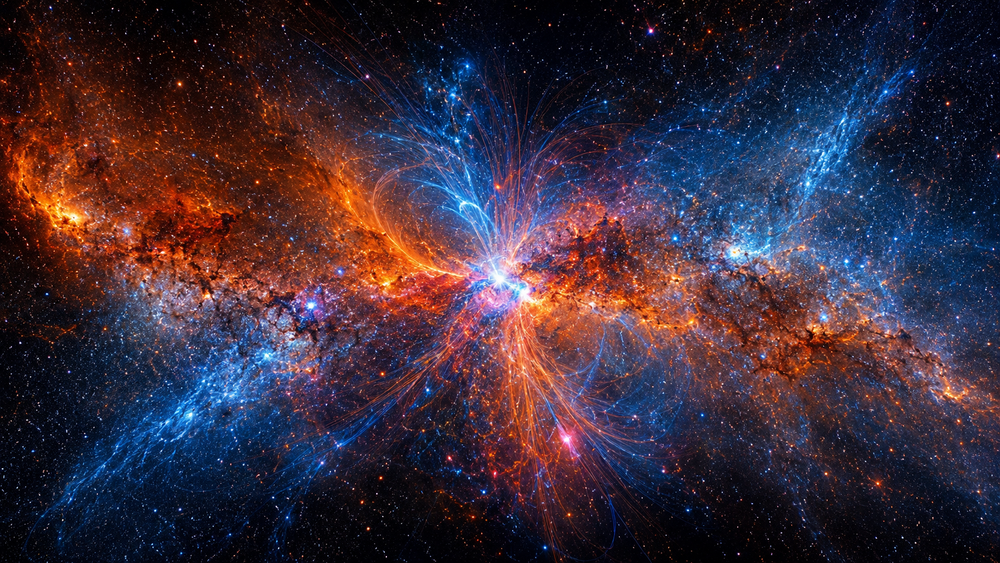
After searching for half a century, astronomers have finally discovered powerful winds blowing from Sagittarius A*, the supermassive black hole at the center of our Milky Way galaxy. The discovery confirms that even a relatively quiet black hole like Sgr A* — which is millions of times less luminous than the active galactic nuclei in distant galaxies — still drives outflows that shape its galactic environment. The finding has implications for understanding how supermassive black holes regulate star formation across entire galaxies.
THE DOUGH
Black hole science drives demand for next-generation observatories and radio telescope arrays, sustaining funding for facilities like the Event Horizon Telescope collaboration and supporting the case for space-based gravitational wave detectors.
We are not financial analysts or investment advisors. Nothing in this newsletter constitutes investment advice. All economic analysis is speculative and for informational purposes only. Do your own research.
THE POSSIBILITIES
If quiet black holes like Sgr A* drive winds strong enough to influence their host galaxies, it could explain long-standing mysteries about why galaxies stop forming stars — a process called "quenching" that current models struggle to reproduce without invoking black hole feedback.
THE HURDLES
Sgr A* sits behind 26,000 light-years of gas and dust, making direct observation extraordinarily difficult. The wind detection required combining data across multiple wavelengths and observatories.
WHAT TO WATCH
- Follow-up observations to characterize the wind's speed, temperature, and extent
- Whether similar winds are detected around other "quiet" supermassive black holes in nearby galaxies
- Implications for the next-generation Event Horizon Telescope and proposed space-based radio interferometers