
THE STORY
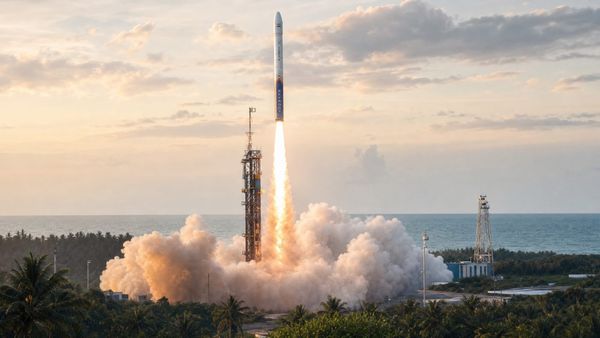
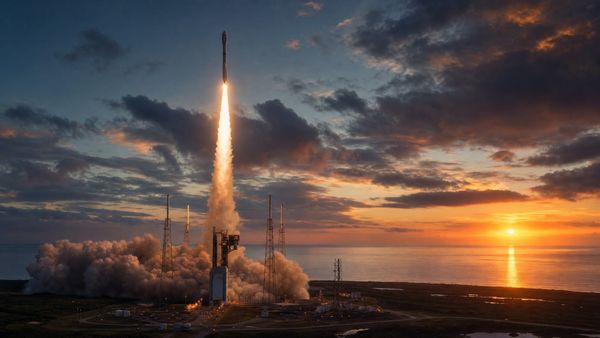
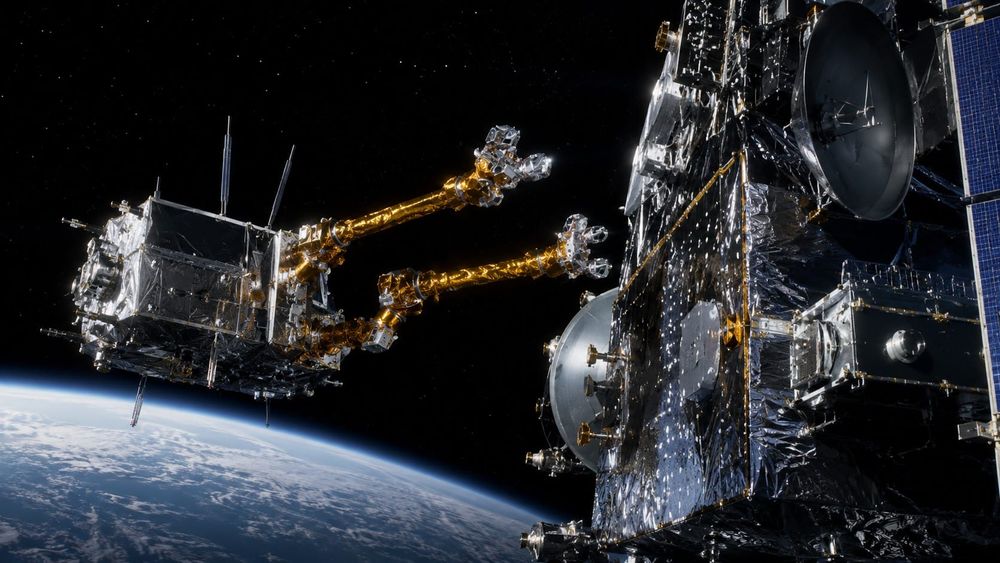
On July 21, SpaceX launched Northrop Grumman's Mission Robotic Vehicle (MRV-1) aboard a Falcon 9 from Cape Canaveral, sending what is arguably the world's most advanced robotic servicing satellite on a journey to geostationary orbit. The MRV-1 carries the Robotic Servicing of Geosynchronous Satellites (RSGS) payload — a DARPA-funded suite of robotic arms and inspection tools developed with the U.S. Naval Research Laboratory — along with multiple Mission Extension Pods (MEPs) that it will install on aging commercial satellites to give them new propulsion and extend their operational lives by years.
This isn't a technology demonstration in the hand-wavy sense. MRV-1 is heading to GEO — 22,236 miles above the equator — where it will autonomously rendezvous with three commercial satellites, grapple them using robotic arms, and physically attach propulsion pods to their structures. The engineering required is staggering: the vehicle must navigate to within centimeters of cooperating (but not purpose-built-for-servicing) satellites, match their rotation, extend articulated arms, and bolt on hardware — all with a multi-second communication delay from Earth. DARPA has been developing the underlying robotics since the early 2010s, and the RSGS system represents nearly a decade of manipulation, sensing, and autonomous rendezvous work that NASA contributed expertise to as well.
The mission is designed to operate for up to a decade, servicing multiple clients over its lifetime. SpaceLogistics, the Northrop Grumman subsidiary operating MRV-1, already has experience with simpler life-extension vehicles — its Mission Extension Vehicle (MEV) series has been docking with and reboosting GEO satellites since 2020. But MRV-1 represents a generational leap: instead of just pushing a satellite from behind, it can inspect, refuel, reposition, and upgrade spacecraft in ways that have never been attempted commercially. The implications extend well beyond commercial telecommunications — if you can fix and upgrade satellites in orbit, the entire economics of the GEO belt changes. Satellites that cost hundreds of millions of dollars to build and launch no longer need to be abandoned when they run low on fuel.
THE DOUGH
The on-orbit servicing market is projected to grow into a multi-billion-dollar sector by the early 2030s. Northrop Grumman is the clear first mover with MRV-1, but competitors including Astroscale (which recently demonstrated proximity operations in LEO) and Orbit Fab (orbital refueling depots) are building adjacent capabilities. GEO satellite operators like SES, Intelsat, and Eutelsat could extend fleet lifetimes by years, deferring billions in replacement costs. For defense investors, the technology has obvious dual-use applications — a robot that can fix friendly satellites can also inspect or disable adversary ones.
We are not financial analysts or investment advisors. Nothing in this newsletter constitutes investment advice. All economic analysis is speculative and for informational purposes only. Do your own research.
THE POSSIBILITIES
MRV-1's true disruptive potential isn't life extension — it's upgradability. If you can attach new hardware to existing satellites, you can retrofit entire constellations with capabilities that didn't exist when they launched. Imagine upgrading a decade-old communications satellite with modern signal processing or adding new sensors to an intelligence platform without building and launching an entirely new spacecraft.
THE HURDLES
Autonomous robotic manipulation in GEO is extraordinarily difficult, and MRV-1 has never attempted it on a real commercial satellite. Any mishap during a servicing operation could damage or destroy a client's asset, creating both an insurance nightmare and debris risk. The technology also raises unresolved diplomatic questions about what constitutes a "servicing" operation versus a "weapons test" when applied to adversary hardware.
WHAT TO WATCH
- MRV-1's first commercial servicing operation — which satellite, timeline, and outcome
- Whether additional GEO operators sign servicing contracts once MRV-1 proves the concept
- Astroscale's ADRAS-J follow-on mission and how LEO debris removal compares as a business model
- DoD interest in leveraging MRV-1-class capabilities for military satellite servicing or inspection
- Insurance industry response — will premiums drop for satellites with servicing options?