
THE STORY
NASA has selected Relativity Space — the rocket company now led by former Google executive Eric Schmidt — to provide the spacecraft, rocket, and cruise-stage operations for its Aeolus mission to Mars, targeting a 2028 launch. Under this new public-private partnership, NASA supplies the Aeolus atmospheric science instrument suite while Relativity handles everything else: building the orbiter, launching it on its own rocket, and flying it all the way to Mars orbit. It is the first time a private company has been tapped to deliver an entire Mars mission end-to-end, from hardware fabrication through interplanetary cruise operations.
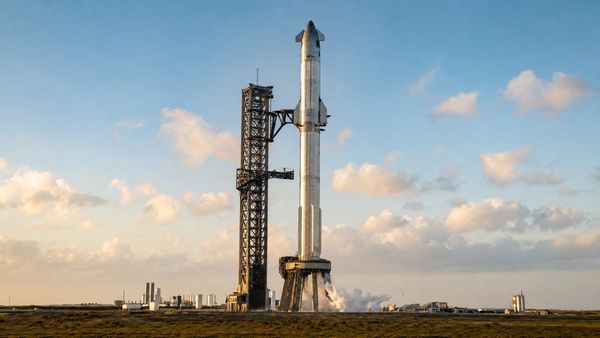
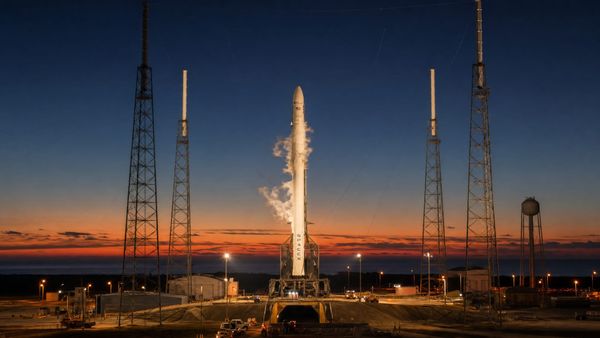
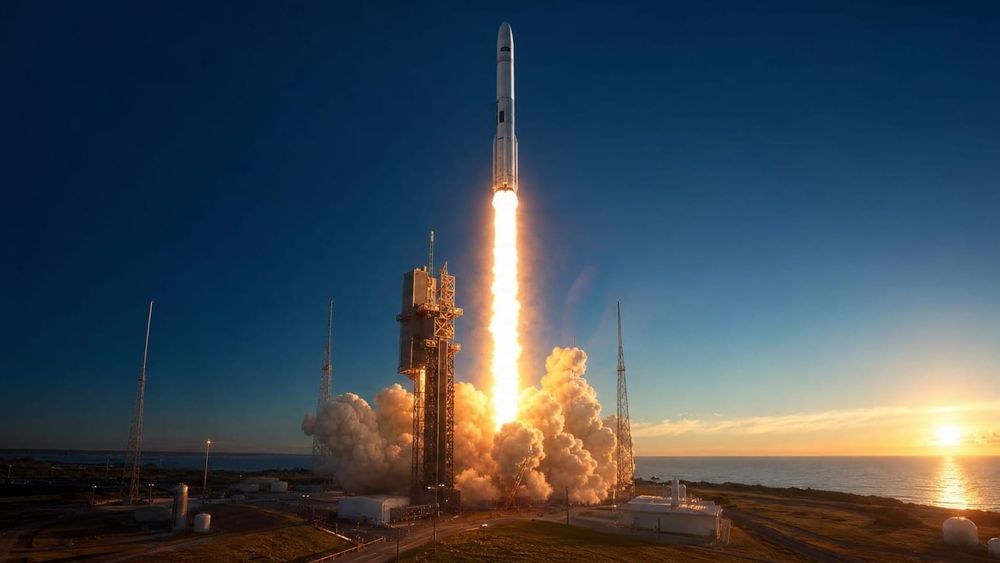
The Aeolus payload itself is scientifically groundbreaking. Once in Mars orbit, the instruments will provide the first-ever daily measurements of the planet's global atmospheric environment — wind patterns, dust storms, temperature profiles, and atmospheric chemistry mapped across the entire planet every single day. Current Mars orbiters provide snapshots; Aeolus promises a continuous weather service for the Red Planet, the kind of persistent monitoring that will be essential for planning future crewed missions and surface operations. For Relativity Space, the contract represents a dramatic vindication. The company stumbled badly on its path to orbit with its earlier Terran 1 rocket, which failed to reach orbit on its only launch attempt in 2023. Schmidt's subsequent acquisition of the company brought fresh capital and strategic direction, pivoting Relativity toward its larger Terran R vehicle — a heavy-lift rocket designed with 3D-printed components and reusable architecture. Landing a Mars mission gives Relativity a marquee contract that validates both the Terran R vehicle and the company's ability to operate beyond Earth orbit.
The partnership also signals NASA's deepening commitment to commercial models for planetary science. Rather than building and operating the entire spacecraft in-house or through traditional cost-plus contracts, the agency is essentially buying a ride to Mars — similar to how it buys cargo and crew transportation to the International Space Station through SpaceX and Boeing. If Relativity delivers, the model could be applied to future missions to Venus, the outer planets, or asteroid belt targets, dramatically compressing timelines and reducing costs for deep-space science. The 2028 launch window is tight. Mars transfer windows open roughly every 26 months, and missing this one would push the mission to 2030 — a delay that would ripple through NASA's broader Mars exploration roadmap.
THE DOUGH
Relativity Space's contract positions it as a direct competitor to SpaceX for interplanetary missions, a market that has been essentially a SpaceX monopoly. The Aeolus mission also creates demand for deep-space communications infrastructure, ground station services, and mission operations support — markets that companies like the Deep Space Network's commercial competitors are eyeing. If Relativity proves it can deliver to Mars, the addressable market for commercial planetary missions expands from near-Earth operations to the entire inner solar system.
We are not financial analysts or investment advisors. Nothing in this newsletter constitutes investment advice. All economic analysis is speculative and for informational purposes only. Do your own research.
THE POSSIBILITIES
The most interesting implication isn't Mars — it's the precedent. If a private company can profitably build, launch, and operate a Mars orbiter, there's no technical reason the same model can't be applied to Venus atmospheric probes, asteroid survey missions, or even outer-planet flybys. NASA becomes a payload customer rather than a mission operator, and the cost of planetary science drops by an order of magnitude.
THE HURDLES
Relativity's Terran R has never flown, and interplanetary missions demand extreme reliability from every subsystem. A single anomaly during the months-long cruise to Mars could end the mission. The 2028 launch window leaves minimal schedule margin, and any delays in Terran R development could push Aeolus to the next Mars opportunity in 2030.
WHAT TO WATCH
- Terran R flight test schedule and results ahead of the 2028 Mars window
- Aeolus instrument integration timeline and readiness reviews
- Whether NASA announces similar commercial partnerships for Venus or outer-planet missions
- SpaceX's response — will it bid on future planetary science contracts?
- Relativity's progress on 3D-printed spacecraft bus components for deep-space environments